

The Mercy of Being Alarmed
This is part of the Walking the Narrow Road Road: A Year with The Pilgrim’s Progress
When Everything Looks Fine but Isn’t
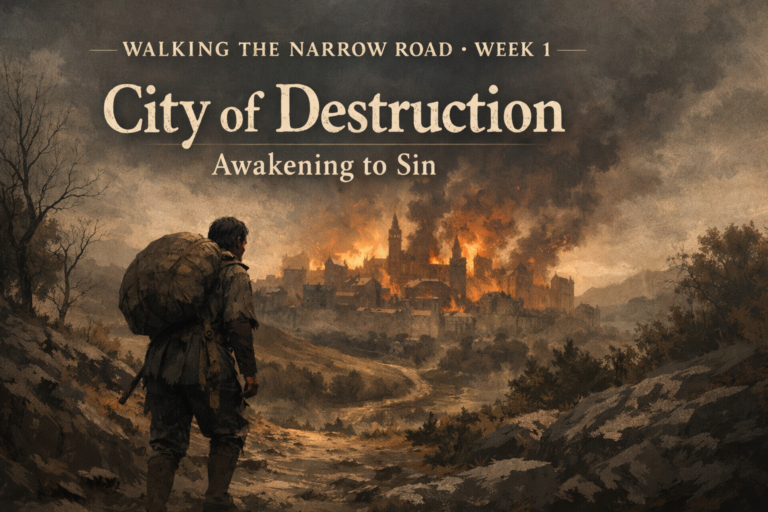
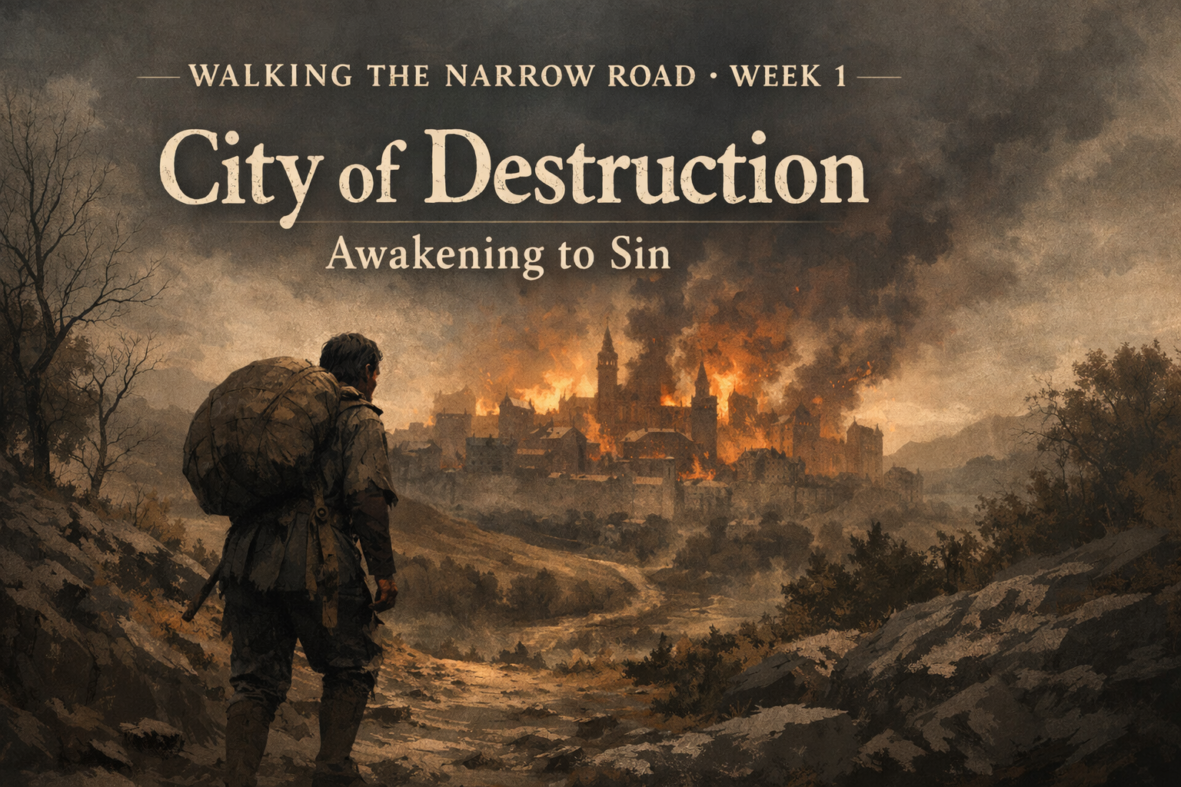
The City of Destruction does not look like a place people should flee.
That is what makes it dangerous.
Nothing in Bunyan’s opening scene suggests chaos or collapse. Families live there. Work continues. Life moves forward. Christian’s house still stands. His neighbors still speak to him. The city functions well enough to lull its people into thinking that everything is fine.
And yet, destruction is certain.
Christian does not run because life has become unbearable. He runs because something far worse has happened. He has learned the truth. The city is under judgment. Fire is coming. And remaining where he is no longer feels neutral.
This is the first mercy of God. Not comfort, but awakening.
Most people perish peacefully, not rebelliously. They sleep well, plan ahead, raise families, and assume tomorrow will arrive like today. Scripture tells a harder truth. Judgment does not wait for our permission. Destruction does not require our agreement. A city can feel safe and still be condemned.
Christian’s fear is not weakness. It is clarity.
The Book in his hand has not ruined his life. It has revealed reality. He is not reacting emotionally. He is responding truthfully. What has changed is not the city. What has changed is his understanding of it.
And once a person sees that where they stand is not safe, staying put is no longer an option.
This is where the narrow road begins. Not with peace, not with answers, and not with relief. It begins when comfort collapses and truth finally breaks through the noise.
The city still looks the same.
Christian does not.
What the City of Destruction Actually Represents
Bunyan calls it the City of Destruction because that is what it is.
Not a mood.
Not a metaphor for stress.
Not a season of personal dissatisfaction.
It is a place under judgment.
The City of Destruction represents life lived east of Eden. Life continuing as normal after the Fall. Humanity building homes, raising families, conducting business, and making plans while standing beneath a verdict it does not acknowledge. Scripture is unambiguous about this condition. “There is none righteous, not even one.” “The wrath of God is revealed from heaven.” “It is appointed for men to die once, and after this comes judgment.”
Bunyan is not speculating. He is echoing the biblical storyline.
From Genesis onward, Scripture presents a sobering reality: judgment does not begin when people feel afraid. It begins because God is holy. The City is not destroyed because its citizens panic. It is destroyed because sin has corrupted the world and rebellion has severed humanity from its Creator.
This is why the City looks livable.
Judgment rarely announces itself with sirens. It often settles in quietly, beneath routines and familiarity. The people of Noah’s day were eating and drinking until the rain began to fall. The citizens of Sodom carried on with daily life until fire descended from heaven. Comfort is not evidence of safety.
Christian’s awakening does not come from watching the city deteriorate. It comes from reading the Book.
The Book does not invite him to self-improvement. It does not offer strategies for living better within the City. It tells him the truth about where he stands. “Condemned to die.” “Judgment to come.” Words that cut through illusion and expose reality.
This is what Scripture does first.
Before it comforts, it confronts. Before it heals, it wounds. Before it tells us what God has done for us, it tells us who we are before Him. The Word of God is living and active, piercing to the division of soul and spirit, judging the thoughts and intentions of the heart.
Christian’s response is not melodrama. It is honesty.
The burden on his back is not vague shame or low self-esteem. It is the weight of guilt. He now knows that he stands accountable before a righteous Judge and that no amount of effort, denial, or distraction can remove that liability. The burden presses down because guilt is heavy, and it cannot be reasoned away.
This is why the City of Destruction can no longer hold him.
Once a person understands that the ground beneath their feet is condemned, staying feels reckless. Remaining feels dishonest. The city may still offer shelter, familiarity, and approval, but it can no longer offer safety.
Awakening always costs something.
Christian has not yet found relief. He has not yet discovered grace. He has only learned the truth. And that truth has made standing still impossible.
So he begins to move.
Not because the road ahead is clear, but because the place behind him is no longer safe.
Why Awakening Feels Like Crisis
Awakening rarely feels like progress.
When Christian begins to speak of judgment and flee the City, those around him do not applaud his clarity. They misunderstand him. Some pity him. Others dismiss him. His concern sounds extreme. His urgency feels unnecessary. The city is still standing. Life still works. Nothing appears broken enough to justify his fear.
This is often how awakening unfolds.
Conviction isolates before it comforts. It separates a person from shared assumptions and familiar agreements. Once someone sees that destruction is real, casual conversation becomes strained. Normal routines feel hollow. What once felt like stability now feels fragile.
Christian’s distress is not only internal. It is relational.
Those who have not read the Book cannot understand why he trembles. Those who feel safe cannot sympathize with someone who is alarmed. What looks like faithfulness to God looks like madness to the city.
Scripture prepares us for this moment. Light exposes what darkness prefers to keep hidden. Truth disrupts peace that was built on denial. When Isaiah saw the holiness of the Lord, his first words were not confident or composed. He was undone. When Peter realized who stood in his boat, he begged Jesus to depart. When the crowd at Pentecost finally understood what they had done, they were cut to the heart.
Awakening always wounds before it heals.
This is why it feels like crisis. Not because something has gone wrong, but because something has been revealed. The ground has shifted. The assumptions that once held everything together can no longer bear weight. A person who has seen judgment cannot unsee it.
Christian’s flight is not impulsive. It is necessary.
Staying would mean pretending that what he now knows does not matter. Remaining would require silencing the truth the Book has already spoken. Movement is not bravery here. It is integrity.
This is the quiet cost of awakening.
You lose the ease of agreement.
You lose the comfort of shared denial.
You lose the ability to remain neutral.
But what you gain is reality.
And reality, once revealed, demands a response.
Christian does not yet know where the road will lead. He only knows that the City of Destruction is no longer an option. The narrow road does not begin with confidence. It begins with honesty. It begins when a person decides that truth matters more than comfort, even when obedience feels costly and uncertain.
This is not the end of the journey.
It is the moment when standing still becomes impossible.
The Biblical Pattern of Awakening
What Bunyan describes in Christian’s flight from the City of Destruction is not unusual. It is biblical.
Scripture consistently presents awakening as the first movement of grace, not its conclusion. Before peace comes conviction. Before assurance comes exposure. Before anyone rests, they must first be awakened to where they stand before a holy God.
When Isaiah saw the Lord high and lifted up, his immediate response was not confidence, but collapse. He did not volunteer for service until he had first been undone. When Peter recognized the authority of Christ, he did not rejoice. He recoiled. “Depart from me, for I am a sinful man.” When Paul encountered the risen Christ, he was not comforted. He was blinded, silenced, and led by the hand.
In each case, God revealed Himself before He reassured His servant.
This is the pattern Bunyan follows. Christian does not begin his journey with forgiveness. He begins with awareness. The Book exposes the truth about sin before it reveals the hope of salvation. This is not cruelty. It is clarity.
Scripture names this work plainly. “Through the Law comes the knowledge of sin.” The Law does not save. It awakens. It does not heal. It diagnoses. It strips away self-deception so that grace, when it comes, is understood as rescue rather than reward.
This order matters.
When conviction is rushed, grace becomes cheap. When guilt is minimized, mercy feels unnecessary. Bunyan refuses both errors. He allows the weight to press long enough for the reader to understand why escape is required at all.
Christian’s fear, then, is not opposed to faith. It is preparatory to it. Awakening does not replace trust in God, but it clears the ground so that trust can take root. Until a person knows they are lost, salvation will always sound optional.
This is why the journey must begin here.
Not at the Cross.
Not at assurance.
Not at peace.
But at the moment when the Word of God makes remaining impossible and obedience unavoidable.
Awakening is not the goal of the Christian life, but it is the doorway into it.
Why Alarm Is a Gift, Not a Curse
Few experiences feel less like grace than awakening.
When the weight of sin becomes real, most of us instinctively want it to stop. We look for reassurance. We search for explanations that will soften the edges. We hope for relief before we have even understood what has been revealed.
But Scripture consistently treats awakening as kindness.
God does not disturb us because He delights in our fear. He disturbs us because He loves us too much to leave us asleep in a place that is not safe. Alarm is not cruelty. It is mercy that refuses to lie.
This is where many modern believers struggle. We are formed by a culture that values comfort above truth and calm above clarity. We assume that peace is always evidence of God’s favor and that discomfort must mean something has gone wrong. Bunyan quietly dismantles that assumption.
Christian’s unrest is not a sign of divine displeasure. It is a sign of divine pursuit.
The Book has done what it was meant to do. It has told the truth about sin, judgment, and accountability. The burden has settled where it belongs. And rather than numbing Christian into despair, it propels him toward life.
This is the strange mercy of conviction. It hurts, but it heals by hurting honestly.
Many believers can look back and name a moment like this. A sermon that unsettled rather than soothed. A passage of Scripture that refused to let go. A realization that life, as it was being lived, could not continue unchanged. At the time, it felt disruptive. In hindsight, it was rescue.
Awakening rarely announces itself as a gift. It feels like loss. It feels like exposure. It feels like standing alone while others remain comfortably asleep. But without it, grace would remain abstract, forgiveness unnecessary, and salvation optional.
God wakes us because He intends to save us.
Christian does not yet understand this. He only knows that staying is no longer possible. Relief has not come, but truth has. And truth, once seen, becomes an act of grace even when it weighs heavily on the soul.
Alarm is not the enemy of faith.
It is often its beginning.
Walk It Out: Learning to Sit with Awakening
Awakening tempts us to move too quickly.
Once conviction sets in, the instinct is to resolve it immediately. We want answers before we have listened. We want relief before we have reckoned honestly with what has been revealed. But Bunyan slows the reader down here for a reason. Formation begins not with escape, but with attention.
This week’s practice is not about fixing anything. It is about seeing clearly.
Begin with Scripture. Read Romans 3:19–20 slowly. Read it aloud if you can. Let the words land without rushing to the next verse. Notice what the passage does not do. It does not comfort. It does not reassure. It tells the truth. It silences excuses. It exposes accountability.
Sit with that.
Then take time to reflect honestly. Ask yourself where you have found safety simply because something felt familiar. Name the comforts you rely on to dull conviction. Write down the passages of Scripture you tend to skim or avoid because they unsettle you. This is not an exercise in self-condemnation. It is an act of clarity.
Pray simply and truthfully. Not for peace yet, but for sight.
“Lord, let me see what You see.
Do not let me mistake comfort for safety.
Do not let me quiet what You are trying to awaken.
Wake me where I am still asleep.”
Finally, commit to a formation habit that honors this moment. Spend time in Scripture this week without rushing toward reassurance. Read passages that confront sin, guaranteed judgment, and human need. Let the Word do its first work before you ask it to do its second.
Awakening cannot be rushed. But it can be received.
Destiny: Awakening Is Not the End
Christian’s story does not end in the City of Destruction.
It does not end with fear.
It does not end with guilt.
It does not end with burden.
But it does begin there.
Bunyan is careful with hope in this opening scene. He does not remove the weight too soon. He does not preview the Cross. He lets the reader feel the necessity of rescue before showing how rescue comes.
Christian is awake now. That is all.
He is not safe yet.
He is not free yet.
He is not at peace yet.
But he is moving.
The City of Destruction lies behind him, even as it continues to burn quietly in the background. Ahead lies a road he does not yet understand, companions he has not yet met, and a salvation he has not yet grasped. The journey will be hard. It will be confusing. It will cost him more than he expects.
But awakening has made one thing clear.
Staying is no longer an option.
And that, strange as it may seem, is the first mercy on the narrow road.